Wicker, Wood or Fabric: Choosing a Basket for the Job
Choosing a basket for the job means matching shape, visibility, and handles to what it holds and where it sits, so everyday items stay easy to use.
The common mistake with choosing a basket is buying one for its appearance before deciding what it must hold. The cost is a container that looks settled on a shelf but tips, hides its contents, or becomes awkward to carry. A useful basket is less like a small piece of furniture than a well-placed handle: it should make one particular task easier.
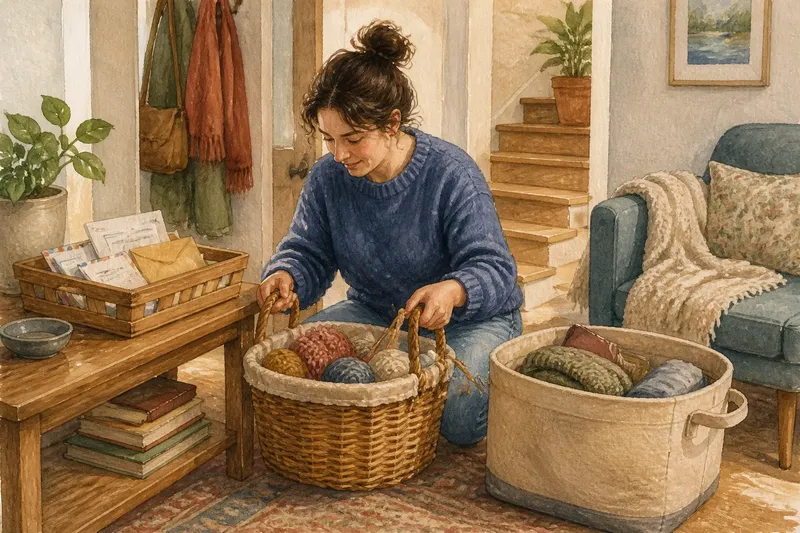
Consider an invented household: Mara shares a small apartment and wants to gather mail, knitting, and a few items that need to go upstairs. They are not one category of belongings, and they do not belong in one basket. The situation gives us a practical way to compare wicker, wood, and fabric without pretending that material alone determines the right choice.
What does each basket need to do?
Mara starts by naming the job and the basket’s destination. Mail needs to remain visible near the entry; knitting should stay together beside a chair; the upstairs items need to travel between rooms. That distinction matters more than matching the baskets to each other.
For each job, ask what goes in, how often it comes out, whether the container will move, and what surface it will occupy. A basket used as a landing place has different demands from one carried in a hand. If its contents are awkwardly shaped, the opening and base matter more than a neat silhouette.
The intended location also narrows the choice. A basket beside a doorway may meet shoes, bags, and passing knees; one on a table can be seen and reached without bending. Before bringing anything home, note nearby furniture, the path people take, and whether the basket must slide beneath a surface. The best location is one that supports the habit, not one that merely has a spare patch of floor.
How do wicker, wood, and fabric differ?
Wicker usually means a woven construction, which may use natural or synthetic material. Its open weave can make light contents easier to spot and gives the sides some flexibility. That same texture may snag delicate yarn or catch on clothing, so a smooth liner can be useful where loose fibers are involved.
Wood baskets, including slatted designs, tend to keep their shape and provide a firmer base. They suit objects that benefit from a defined container, such as folded paper or small household supplies. The rigid sides can make a basket less forgiving in a narrow space, and a solid-sided version hides what is inside unless it has an open top.
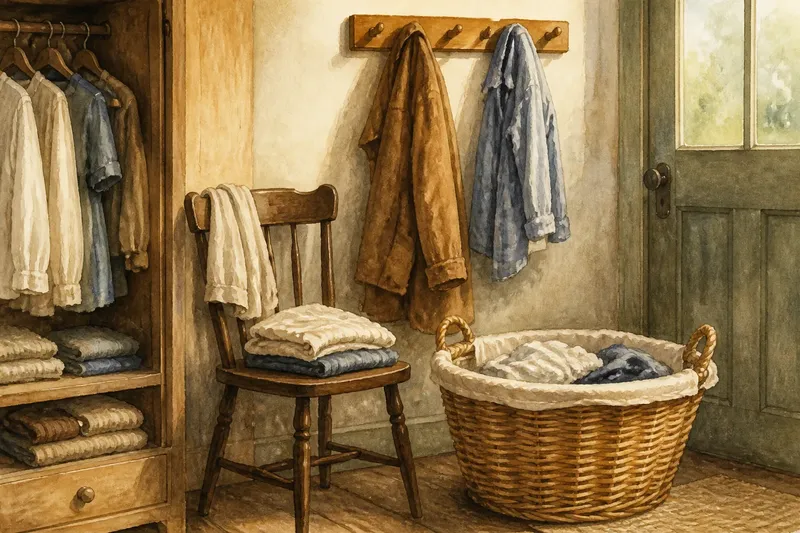
Fabric baskets are often light and easy to grasp, and a soft-sided shape can fit into a crowded corner. They may collapse when empty or slump under an uneven load. A reinforced base or structured rim can help, but the basket’s actual construction matters more than a product label that simply says “storage.”
Material also affects cleaning and the things it can safely hold. Dust, dampness, sharp edges, and delicate surfaces all change the decision. Check the care label or manufacturer’s instructions for cleaning and placement; those directions take precedence over general household advice.
Which shape suits the contents?
A wide, shallow basket makes it easier to see and reach items spread across the bottom. It can work for mail, folded cloths, or objects used often, provided it will not crowd the surface beneath it. A deeper basket holds more upright items but can turn smaller contents into a layer at the bottom.
For bulky or irregular objects, consider a broad opening and a base that does not wobble. A tapered basket may be easier to lift from a shelf, while a straight-sided one can make more consistent use of a shelf’s footprint. Neither shape is automatically better: the question is whether the contents can enter and leave without being wedged or rearranged each time.
Open-top baskets offer quick access but do little to disguise visual clutter. Tall sides can contain loose items while making them harder to identify. A useful compromise is a lower-sided basket for things used daily and a deeper one for items that can remain out of sight until needed.
Will it be easy to carry?
Handles help only when they are comfortable, securely attached, and positioned for the load. A pair of side handles can balance a basket carried with both hands; a single handle may suit a light container lifted briefly. If the basket will travel through a doorway or up stairs, check that its width and shape leave room to hold it without blocking your view or movement.
Think about the contents, not just the basket’s empty weight. A broad container filled with mixed objects can become difficult to steady, while a narrow basket may be easier to carry but hold less than expected. Keep loads manageable and avoid carrying anything that obscures your path. For heavy or fragile items, a basket may be the wrong carrier.
Say Mara imagines carrying knitting from the living room to a sunny seat. A small wicker basket with a smooth liner and two accessible handles could keep the yarn visible without catching it. If the knitting includes needles that might press through the weave, Mara could instead choose a fabric basket with a firm base and keep the sharp tools in a separate case. The observable result is straightforward: the project can be picked up as a group, while loose yarn and tools remain easier to manage.
What should you check before choosing a basket?
How much of the contents should stay visible?
Choose an open or low-sided design when quick recognition matters, as with mail awaiting attention. A deeper or less open basket suits items whose appearance is not useful to see constantly, as long as you can still retrieve them without digging.
Does the basket need to fit a shelf or floor space?
Compare its footprint with the available surface, including space needed to lift it out. A basket that fits only when pressed against neighboring objects is likely to be inconvenient in daily use.
Will it be moved often or mostly left in place?
For frequent carrying, prioritize comfortable handles, a stable base, and a shape that stays balanced when partly full. For a stationary basket, the opening and how it sits beside nearby furniture may matter more than portability.
Could its material catch, mark, or complicate cleaning?
Look for rough edges near delicate fabric, surfaces that may be scratched, and crevices that could collect dust. Choose a lining or a smoother construction when it addresses the specific contents, rather than adding one automatically.
How does Mara sort the three jobs?
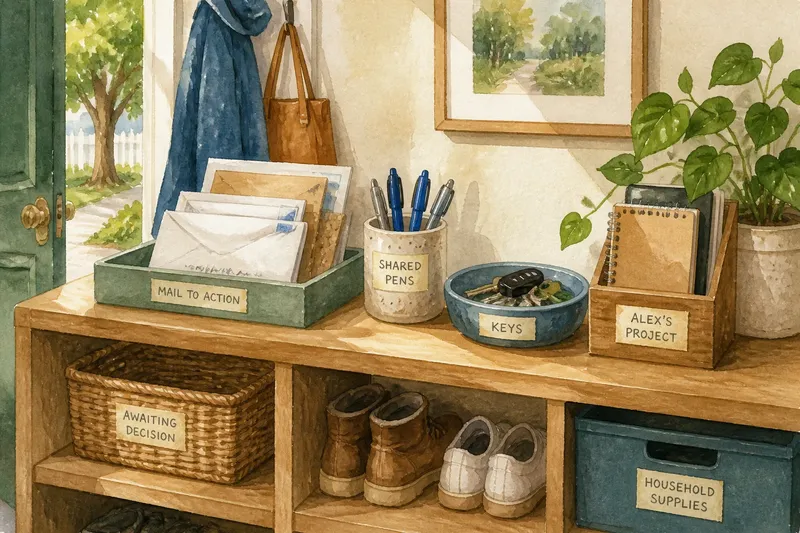
For the mail, Mara chooses a shallow, open wood basket for the entry table. The firm base sits flat, and the papers remain visible; the basket is not meant to travel. Mara keeps only current mail there, so the container does not become a permanent archive by accident.
For knitting, Mara uses a fabric basket beside the chair. Its soft sides fit the available corner, and a firmer base keeps the project from folding into itself. The yarn and current pattern stay together, while needles remain in their case. This choice favors a forgiving surface and easy access over a rigid shape.
For the upstairs items, Mara selects a modest wicker basket with handles and a relatively broad opening. It is a temporary carrier rather than a place to store unrelated belongings. Mara puts only items already destined for upstairs inside, then returns the empty basket to its usual spot. If it were left full at the foot of the stairs, it would have changed from a useful carrier into a new obstacle.
The point is not that these materials must be assigned to these particular tasks. A smooth wicker basket could hold mail, a wooden one could sit beside a chair, and a structured fabric one could carry household items. The fit depends on how the basket behaves in its location and how its contents are handled.
What should you reconsider after it is in place?
Use the basket through ordinary routines and notice friction rather than judging it by whether the room looks finished. Are contents visible enough? Does the opening admit the largest item? Can the basket be lifted without shifting nearby objects? Those observations indicate whether shape, material, or placement needs to change.
If a basket is repeatedly left full, ask whether it has a clear destination and whether carrying it is comfortable. If small objects vanish at the bottom, try a shallower shape or a simple divider. If the weave catches fabric, move that project to a smoother container. Small adjustments often solve the actual problem more neatly than buying a matching set.
Choosing a basket for the job is ultimately an exercise in matching three things: what goes inside, how the container is handled, and where it sits. Mara’s three baskets work because each has a distinct purpose, not because the materials form a coordinated collection. Start with the awkward moment a basket should remove, then choose the shape and material that make that moment easier to manage.