The Myth That Every Chore Needs a Weekly Slot
A chore schedule built around visible cues helps occasional tasks get remembered without forcing every household job into a rigid weekly slot.
The common mistake with a chore schedule is giving every task a weekly appointment, whether it needs one or not. The calendar fills, a missed Tuesday becomes a small source of guilt, and occasional jobs still slip past because they do not naturally belong to Tuesday.
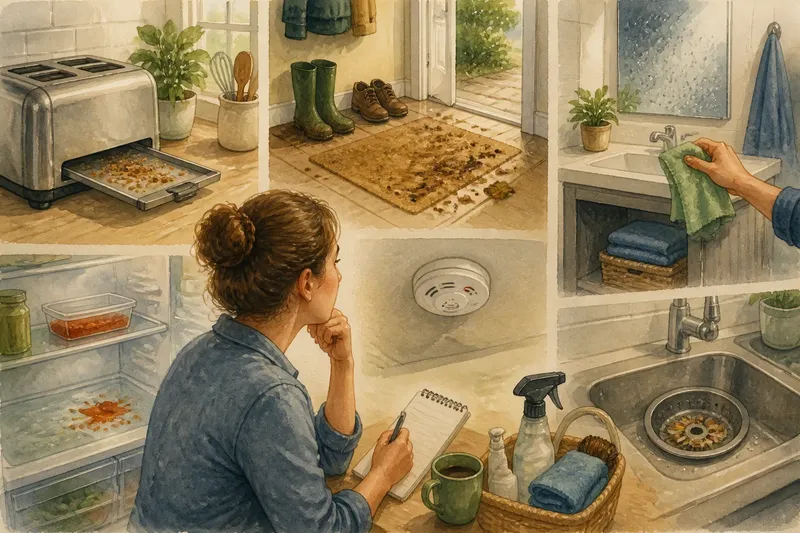
A weekly slot can suit a routine task, such as taking out the kitchen recycling. But checking a guest-room smoke alarm, wiping the refrigerator shelves, or cleaning a muddy entry mat may depend on use, weather, or what is visibly happening. For these chores, linking the task to a cue—a clear change or event you can see—often makes more sense than assigning it a date.
Why does a weekly chore schedule fall apart?
A schedule breaks down when it treats different kinds of work as if they behave alike. Some jobs recur predictably; others become necessary only after a particular mess, season, or household event. Putting both kinds on the same weekly grid creates reminders that are either premature or easy to ignore.
There is also a simple attention problem. A chore written in a planner is out of sight when you are standing beside the thing that needs attention. A cue is already there: crumbs in the toaster tray, a dusty fan grille, or a stack of takeout containers that has begun to occupy the counter as if it pays rent.
This does not mean abandoning routines. It means separating tasks by what prompts them. Keep a regular slot for work that benefits from a regular rhythm; let visible or event-based cues prompt work that does not.
What if a task is scheduled before it is needed?
If you repeatedly clean something only because the calendar says so, the schedule may be more frequent than the task requires. That wastes attention and can make the whole system feel fussy. Instead, identify what condition would actually make the chore useful.
For example, a refrigerator shelf may need wiping after a spill or when a sticky ring appears, not automatically every weekend. The cue should be specific enough to act on: “wipe the shelf when a leak or residue is visible” is clearer than “clean refrigerator sometimes.” For food-safety concerns, follow the product label and ordinary safe food-handling guidance.
Some tasks do need a recurring reminder even when there is no obvious visual cue. A smoke-alarm check, for instance, should follow the manufacturer’s instructions rather than an improvised guess based on appearance. Use a calendar reminder for that kind of maintenance; visible cues are not a substitute for instructions that specify a schedule.
What if the cue is easy to miss?
A cue only helps if it is noticeable at the moment you can do something about it. A dusty vent above a tall cabinet may be visible from the floor only if you happen to look up. A damp bath mat can be hard to notice when it is folded over the tub. Put the reminder where the condition becomes apparent, or make the cue easier to see without creating a new hazard.
Try naming the cue in ordinary language. “When the entry mat leaves grit on the floor, shake or vacuum it” gives you an observable trigger and a response. “Keep entry clean” is a wish, not a prompt. A cue works like a label on a drawer: it puts the right thought beside the place where it belongs.
Choose an action that fits the cue, too. A small spill may call for a quick wipe, while a mat that has collected dry grit may need a shake outside. If the task has several possible responses, write down the one you can reasonably do with the tools already nearby.
What if several people share the chore?
Visible cues can cause friction if one person interprets them as a request and another sees them as background. A household can agree on a plain threshold: for instance, the counter gets wiped when visible crumbs remain after a meal, rather than whenever someone dislikes how it looks.
It also helps to decide who owns the response. That does not require assigning every chore to one person forever. You might agree that whoever empties the dishwasher checks whether the sink strainer needs clearing, or that the person who notices a full paper-recycling bin takes it to the shared collection point.
Keep the agreement small and visible. A note near the relevant area can say what counts as the cue and what action follows. Avoid turning the note into a long list of standards; a rule nobody can remember is a decorative sign with administrative ambitions.
How can occasional chores be tied to visible cues?
Which cues work for cleaning tasks?
Look for a condition you can see or feel without dismantling anything: crumbs on an appliance tray, residue on a shelf, or grit tracked beyond the doormat. Link the chore to that condition, then keep the cleaning tool accessible where it is safe and sensible to store.
Can an event serve as a cue?
Yes. Hosting guests, finishing a gardening session, or putting away winter coats can prompt a related task, such as washing a guest-room hand towel or shaking soil from the entry mat. The event is useful because it is already part of the household’s routine.
What if the task has no visible warning?
Use a calendar, a product reminder, or a household note for tasks whose timing comes from instructions rather than appearance. Filter changes and alarm maintenance can fall into this category; check the relevant manufacturer instructions and follow local requirements where they apply.
How can I keep a cue from becoming another chore?
Make the response brief and proportionate, and avoid adding a new inspection ritual. If you have to patrol the house every day to discover whether a task is due, the cue is not helping much; attach the action to a moment you already encounter.
What if the task still gets forgotten?
First ask whether the cue is visible, specific, and connected to an action. “Clean the hall” is broad enough to be postponed indefinitely. “When leaves collect on the entry mat, shake it outdoors” describes a condition and a manageable response.
Say you notice that a bathroom mirror gets spotted after someone washes their hair, but nobody remembers to clean it later. You could keep a microfiber cloth in an appropriate nearby cupboard and agree that the person who spots the film wipes it then. The expected observable result is a clearer mirror without a separate weekly appointment; if the cue rarely appears, there is no need to schedule the wipe just to keep the calendar occupied.
If the cue appears often but the response keeps getting postponed, the task may be too inconvenient, too large, or missing a necessary tool. Break off a manageable part, move the supplies to a suitable location, or choose a more realistic point in the routine. Do not store chemicals where children or pets can reach them, and follow their labels.
How do you decide which chores belong on the calendar?
Use a calendar when timing itself matters: a recurring household collection day, a maintenance reminder specified by the manufacturer, or a task that must happen before a planned event. Use a visible cue when a condition or ordinary event tells you the work has become useful. Some homes will need both approaches.
For a short trial, choose a few chores that are currently being scheduled without much reason. For each one, write down the cue, the action, and the tool or location needed. Keep a calendar entry only when the task has a genuine timing requirement; otherwise, let the cue do the reminding.
A chore schedule should support the household, not turn every ordinary mess into an appointment. The best cue is one you already notice, attached to a response small enough to carry out while you are there. That is a more dependable role for a schedule: reserve it for what has a date, and leave the rest to the signs the house is already giving you.