A First-Night Kitchen Box for the First Evening After a Move
A first-night kitchen box keeps your first meal after a move simple, with the dishes, utensils and cleanup supplies you can reach without unpacking.
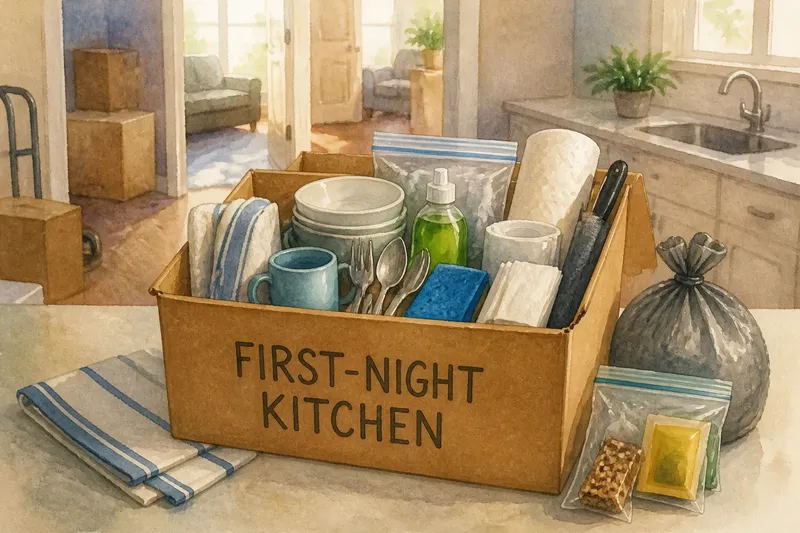
The common mistake with a first-night kitchen box is packing it like a miniature version of the whole kitchen. That leaves you searching a crowded carton for one spoon, when the point is to make the first meal possible without unpacking everything. A small, deliberate kit keeps the evening manageable and lets the rest of the kitchen wait.
What is a first-night kitchen box for?
It is a temporary kit for eating and drinking on the evening you arrive, not a promise to cook a proper dinner. Think of it as a bedside lamp: useful because it handles an immediate need, not because it replaces the room’s full lighting.
Set up the box before the move and choose items for the people in your household and the meal you expect. For takeout, you may need plates, cups and napkins. For a simple meal, add only the tools and ingredients that meal requires.
Keep the scope modest. The box should support a meal, a drink and basic cleanup, while specialist cookware, pantry supplies and the full dish collection can wait.
What belongs in the box?
Start with the people who will eat at home that evening, then pack one usable place setting per person, plus a spare if that suits your household. Reusable items reduce rubbish, but disposable plates and cutlery can be reasonable if washing access is uncertain. Choose what you can find and use without opening other cartons.
- Eating: Check that each person has a plate or bowl and the utensils needed for the planned food; if so, pack them, and if not, add the missing pieces or choose simpler food.
- Drinking: Check that there is a cup or reusable water bottle for each person; if so, pack them, and if not, add enough or plan to use disposable cups.
- Food preparation: Check whether the planned meal needs a knife, cutting board or can opener; if it does, pack only the required tool, and if it does not, leave those items behind.
- Serving: Check whether people will share food from a container; if so, pack one serving spoon or similar utensil, and if not, omit it.
- Cleanup: Check whether you expect to wash dishes; if the sink and water are available, pack dish soap, a sponge or cloth and a drying towel, and if not, use disposable items and keep a trash bag handy.
- Convenience: Check whether napkins, paper towels or a container for leftovers suit the meal; if they do, pack the useful items, and if not, keep the box smaller.
- Food and drink: Check that any snack or drink is sealed and suitable for storage; if so, pack it separately from cleaning products, and if not, leave it out and choose something that can be stored safely.
- Knife safety: Check that any knife is sheathed or securely wrapped; if it is, place it apart from dishes, and if it is not, secure it before packing or leave it out.
Keep food choices simple. A sealed snack, tea bags or another familiar item can help if plans change, but perishable groceries need suitable storage rather than a place in the box. A loose knife can cut through cardboard or catch someone reaching inside, so sheath or wrap it securely.
How should you choose what to pack?
Work backward from the meal you are likely to eat. If you will order food, you may not need a cutting board or cooking tool. If you will heat a prepared dish, include only the utensils and serving items that dish needs. This keeps the box from becoming a catchall for objects that feel vaguely kitchen-related.
Check access before choosing anything that depends on the new home. You may not know whether the refrigerator is ready, whether the sink is available or whether an appliance can be used. Follow appliance instructions and product labels, and check local rules where they apply. If a connection or condition raises a safety concern, leave it alone and ask a qualified professional.
Say you expect to arrive late and plan to eat a delivered meal. You have two adults and pack two plates, two forks, two cups, napkins, dish soap, a sponge and a trash bag; you leave the cutting board behind because the meal needs no preparation. The expected result is that you can eat, clear the packaging and wash the dishes if the sink is usable, without opening the cookware carton. If the sink is unavailable, the tradeoff is to use disposable dishes or skip washing until access is restored.
How do you keep the box easy to find?
Use a sturdy, manageable carton or lidded tote that will not be buried beneath heavy kitchen equipment. Mark several sides with “FIRST-NIGHT KITCHEN” in large lettering rather than relying on a label that may face a wall. If the box travels in a vehicle with other household goods, keep it with items you can reach first.
Put cleanup supplies together in a leak-resistant bag inside the box. Separate dishes and cups from the knife or can opener; a clean dish towel can protect fragile items and later serve as a drying towel. Keep food sealed and separate from soap or other cleaning products.
Do not add important medications, personal documents or everyday valuables just because this carton is easy to identify. The kitchen kit should stay focused on the first meal, not become a general emergency box with several jobs and no clear owner.
What should you do when the kitchen is unfamiliar?
What if the sink is not ready?
Use disposable plates and cutlery, or choose food that does not require washing dishes, and keep a trash bag accessible. Do not assume the sink or water supply is ready simply because the room looks finished.
What if you are unsure whether an appliance works?
Choose a meal that needs no appliance, or use only equipment you know is available and safe to operate. Do not troubleshoot gas, electrical or built-in equipment yourself; contact the responsible property manager or a qualified professional if there is a concern.
What if the meal plan changes?
Use the box’s flexible basics—cups, utensils, napkins and cleanup supplies—and leave the rest packed. A simple snack or delivered meal is easier to accommodate than opening another carton for one missing tool.
When should you unpack the box?
After the first meal, put reusable items where they belong and move unopened supplies into normal kitchen storage. The box has done its job once ordinary dishes and cleanup supplies are easy to reach.
How can you adapt the kit to your household?
Account for the people and routines that will shape the first evening. A child may need a familiar cup, and someone who uses a particular utensil may need it packed where it is easy to reach. A pet’s food bowl is not tableware, but keeping it accessible elsewhere may help; decide before the cartons are sealed.
Think about carrying and storage, too. A tote with a secure lid may be easier to identify and reuse, while a cardboard box may stack more neatly with other cartons. Choose a container you can carry without the contents shifting, and keep liquids away from paper goods.
A first-night kitchen box works best when it stays narrow in purpose: enough to eat, drink and tidy up, without assuming the whole kitchen will be ready. Pack for the evening you expect, label the box where it can be seen, and let the remaining cartons wait until you have room to open them.